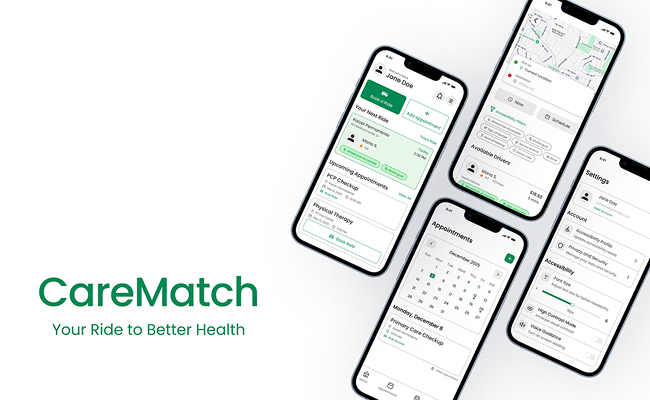
CareMatch is a UX project focused on improving access to safe, reliable transportation for elderly and disabled individuals. I designed a system that connects riders with trusted caregivers, prioritizing safety through features like shared trip details, caregiver verification, and accommodation preferences.
CareMatch was inspired by a personal problem I witnessed firsthand. My family often struggled to coordinate who would take my grandmother to medical appointments. Due to work schedules, availability, and safety concerns, traditional ridesharing services like Uber felt unreliable and risky, especially given her age and accessibility needs.
Marginalized populations, especially elderly, disabled, and medically vulnerable individuals, often face barriers to healthcare access due to transportation challenges.
Caregivers are left juggling calendars, texts, and logistics, while riders lose autonomy and safety.
I conducted user research by analyzing existing transportation platforms and identifying gaps in accessibility and safety features. I focused on understanding the needs of elderly users and caregivers, including concerns around trust, communication, and ease of use. Key insights showed that users prioritize clear information, reassurance, and simple interactions — especially in high-stress situations.
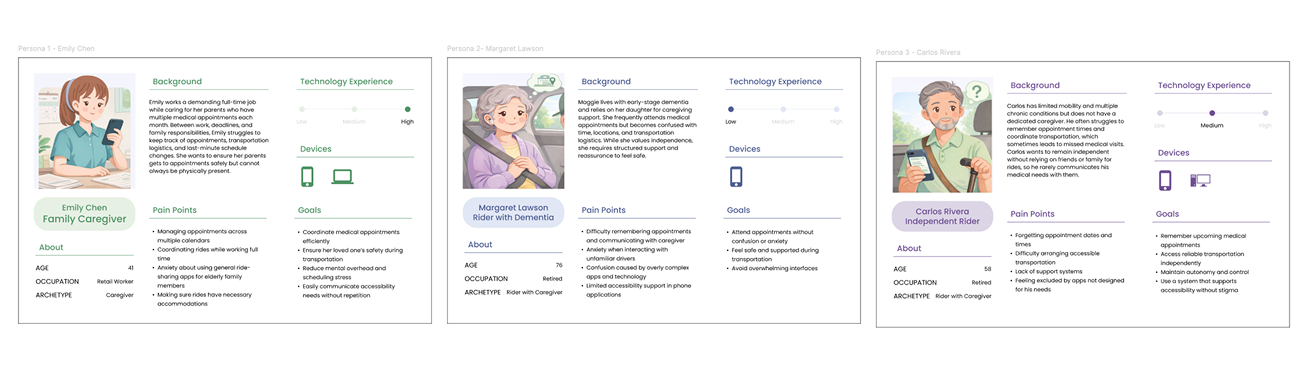
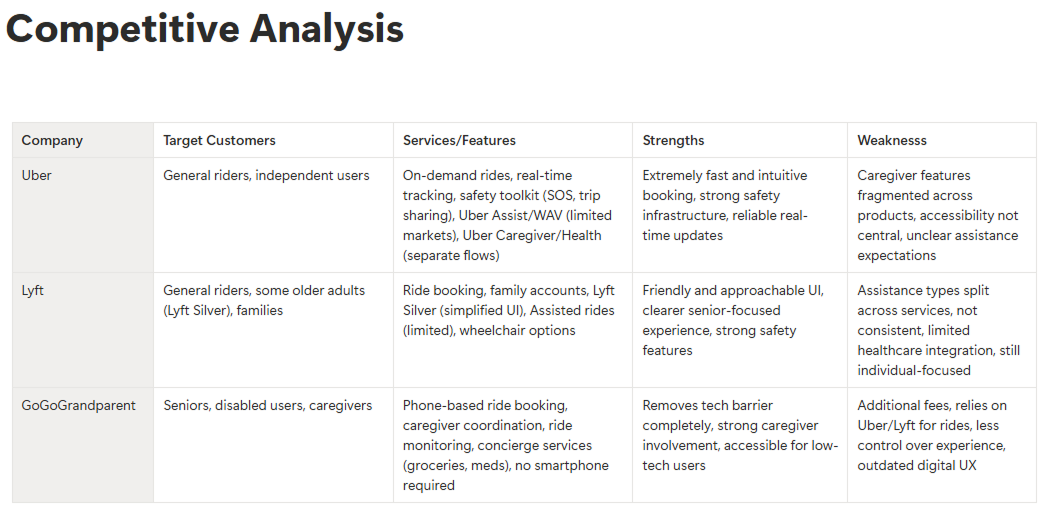
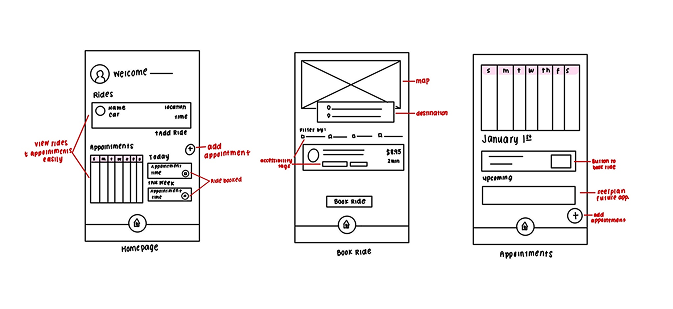
Using insights from our personas and user research, we created a wireframes
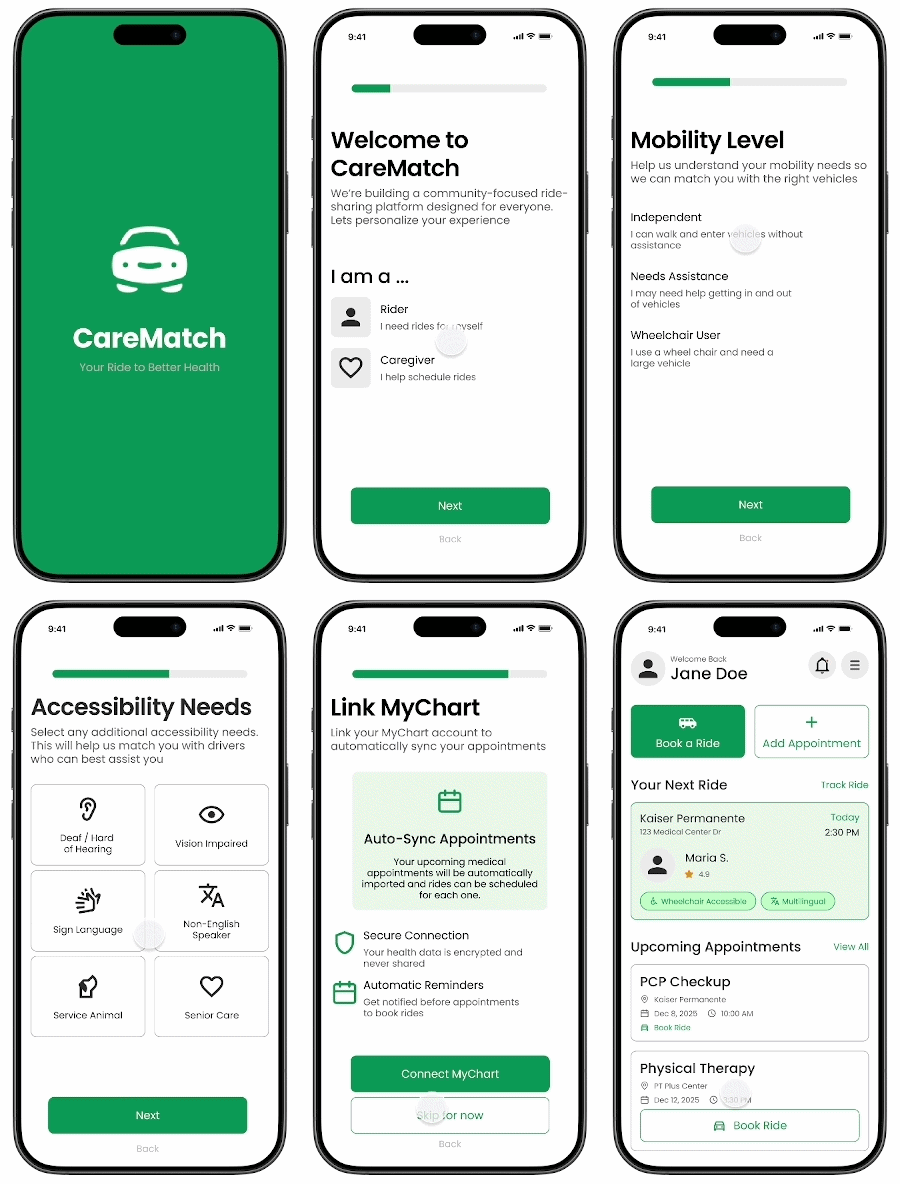
Sign up pages walk users into creating a personalized user experience by allowing them to choose their own needs
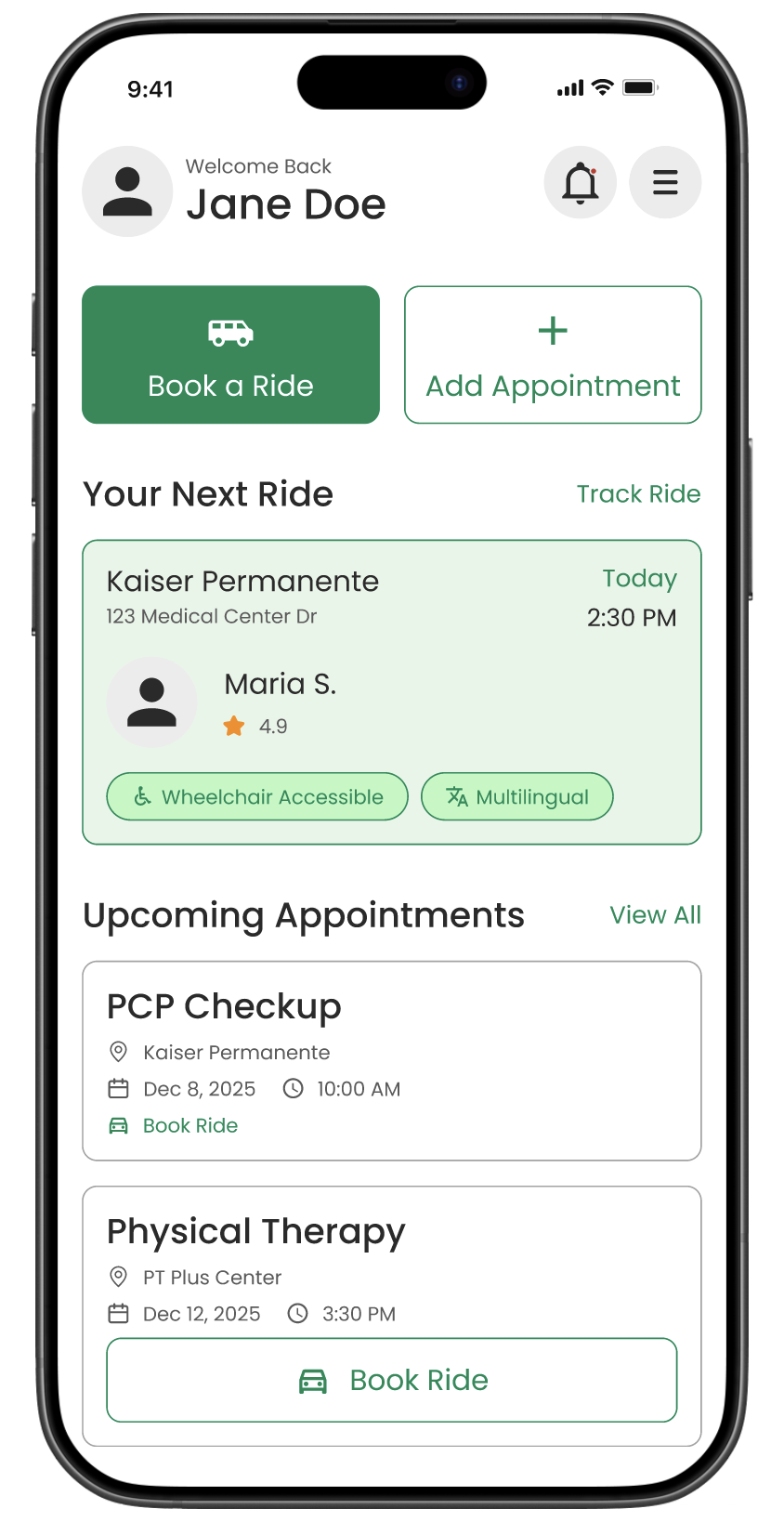
Home page provides quick access to rides and appointments
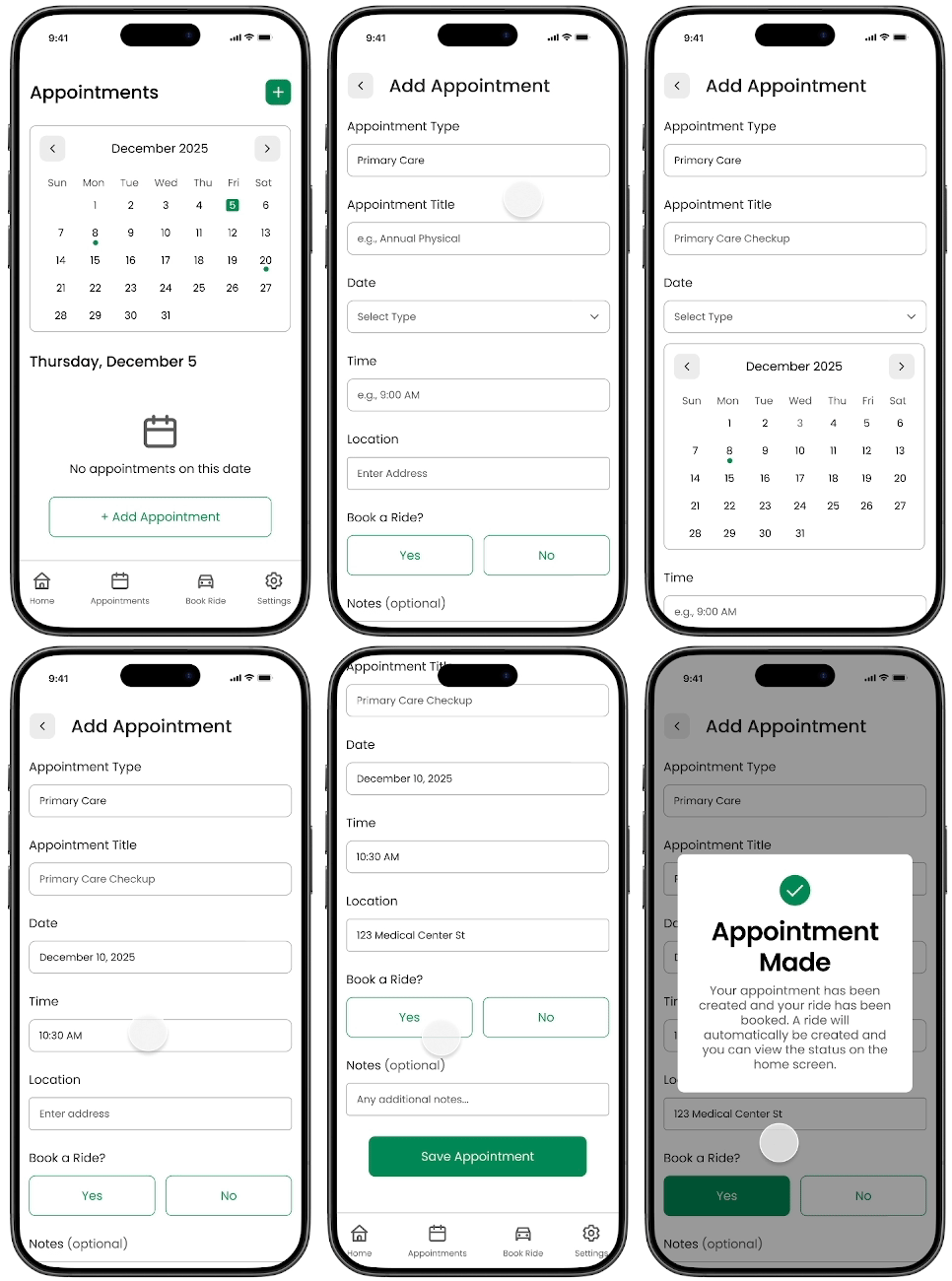
View and create appointments effortlessly through a built in calendar app. These appointments will sync and appear to both parties, makes keeping track of appointments easy and quick.
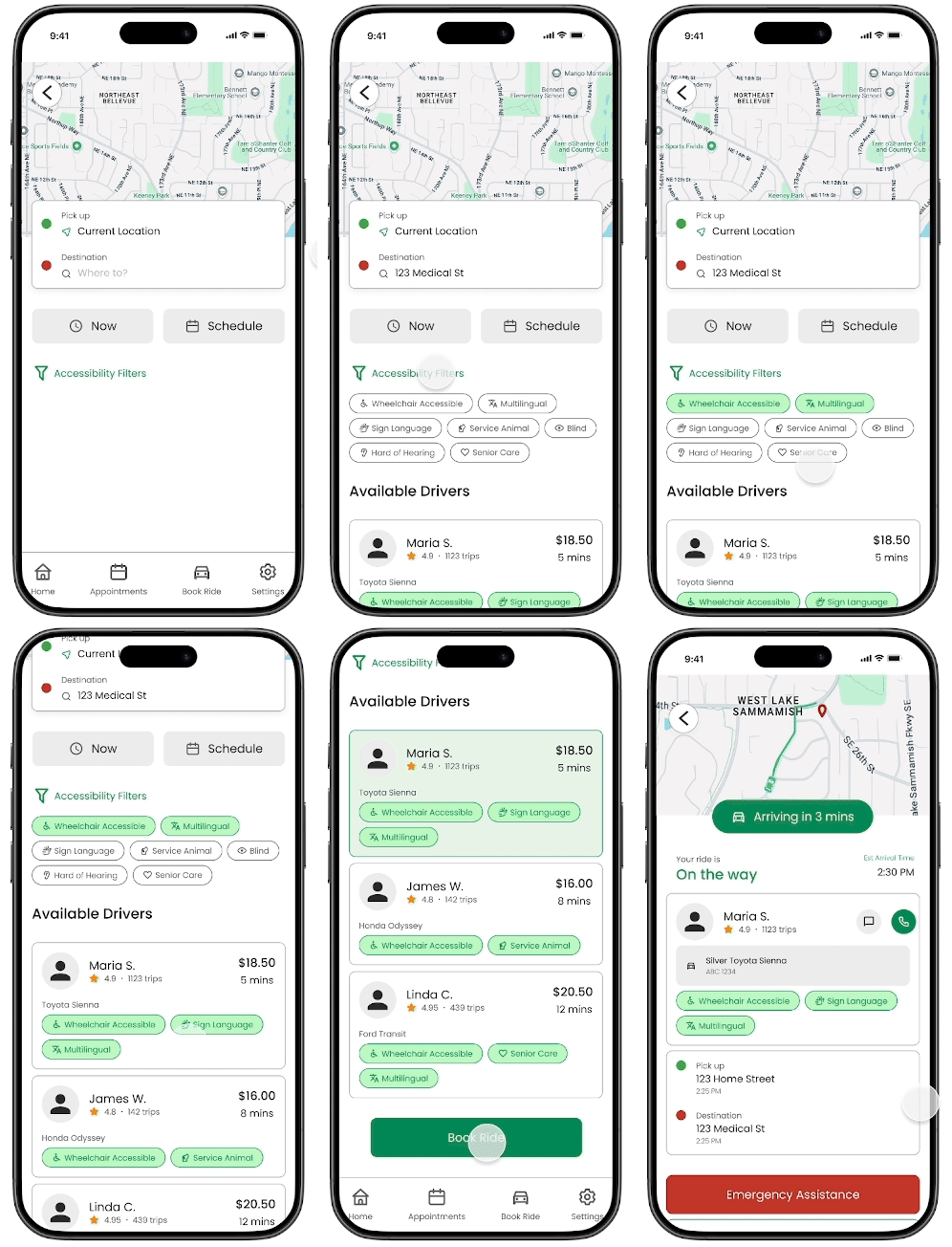
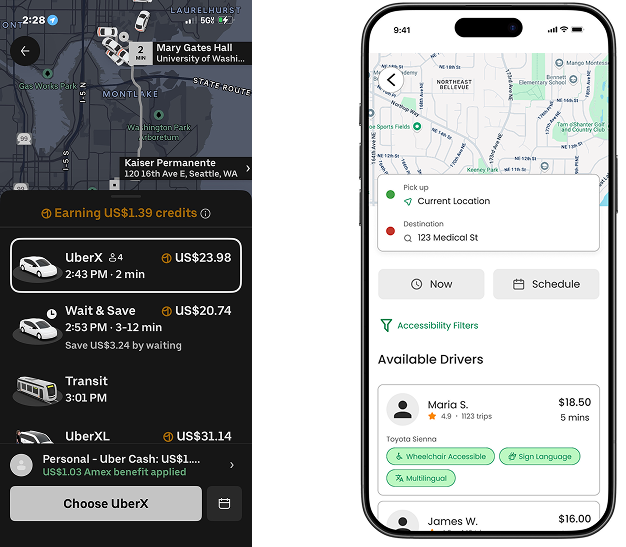
Allows to filter rides based of medical needs when pre-booking or book rides in real time. This connects the gap between accessibility and healthcare.
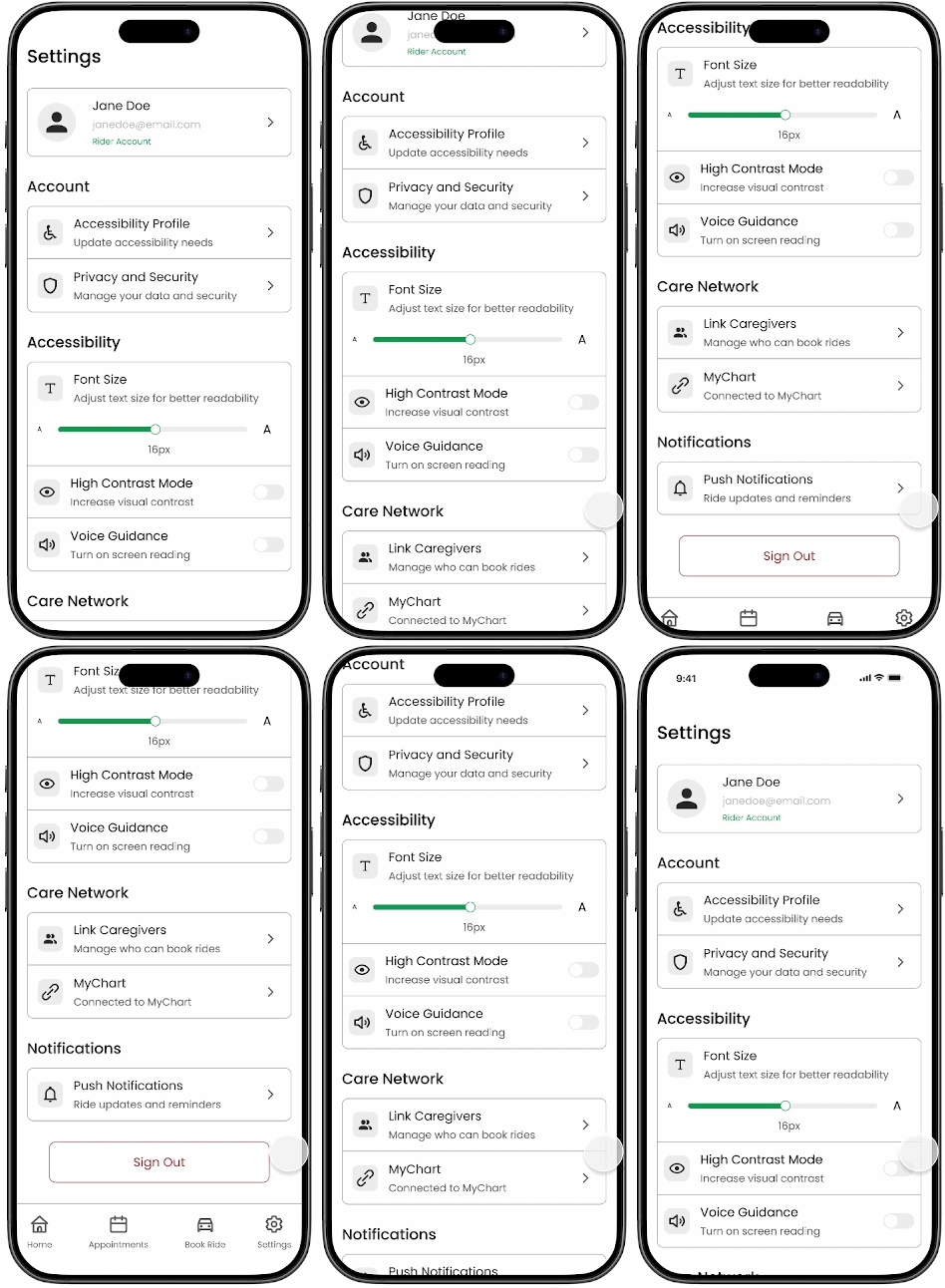
Provide a personalized experience with detailed accessibility settings such as increasing text size, and enabling screen readers.
I intentionally modeled navigation patterns after familiar apps. By leveraging Jakob's Law, users don't need to learn how to use CareMatch, only why it's safer.
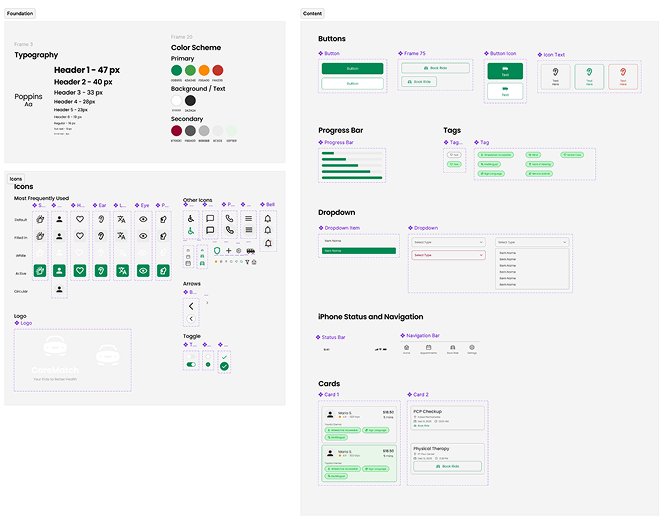
I documented styles and components throughout the application to guide development and maintain consistency. I sorted components by their type, such as input boxes, cards, and popups, into specific boards to make them easier for engineers to find during development.
Accessibility must be designed as a system, not added as a feature. Designing CareMatch required prioritizing clarity, predictability, and low cognitive load for elderly, disabled, and cognitively impaired users. Supporting real caregiving workflows meant balancing caregiver control with rider autonomy through structured yet flexible user flows.